

5 MIN READ
The interview loop has not changed since 2015. Resume screen, phone screen, take home, on site with four to six interviewers, debrief, offer. Every tech company in the world still runs some version of this. Meanwhile, the actual job the candidate is being hired for has changed three times in the last three years.
That gap amounts to the story of tech hiring in 2026.
What the resume still says
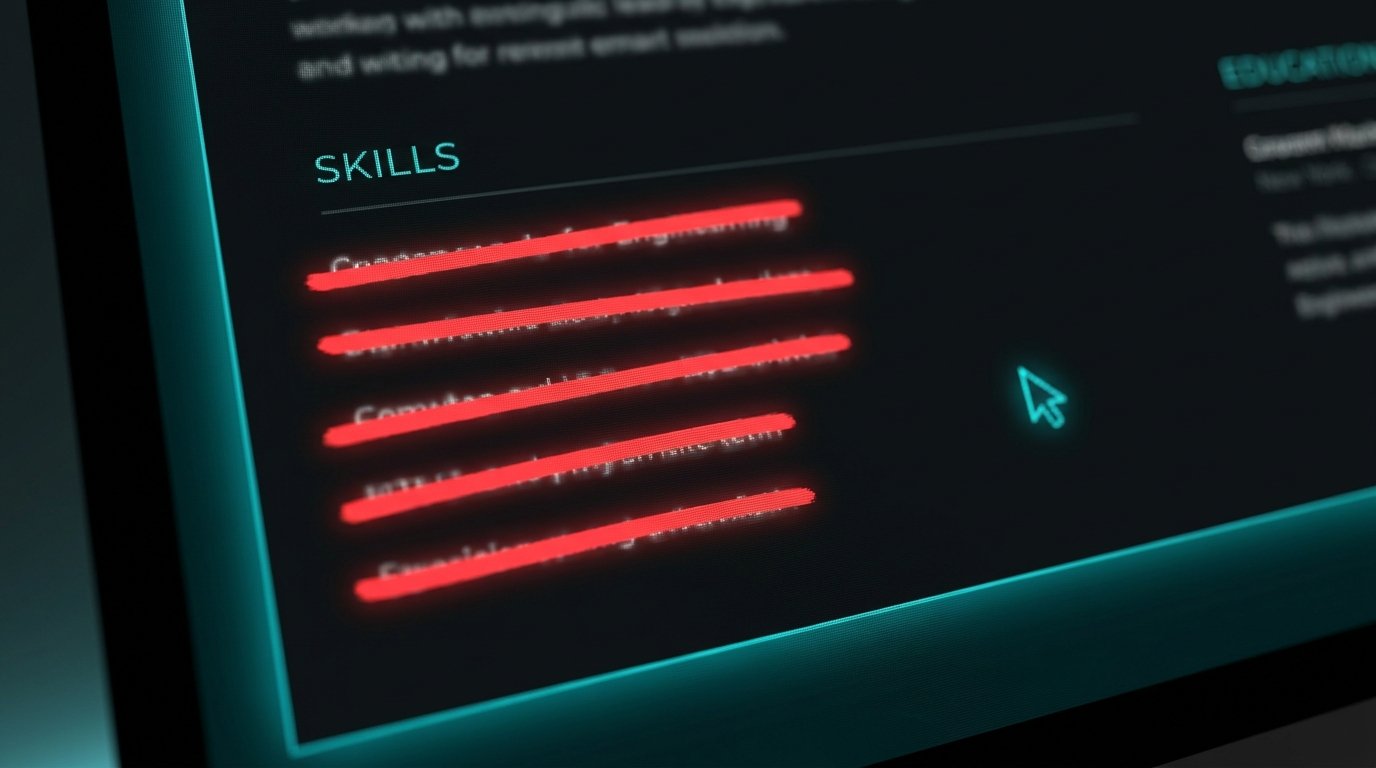
The resume is, by design, a list of credentials. Degrees, certifications, years of experience, a list of languages and tools. None of these tell you whether the person can take a vague product spec and turn it into a working system.
That has always been true. What is new is how little the credential list correlates with the actual day-to-day work of a software engineer in 2026.
What the job actually requires
A senior engineer in 2026 spends less time writing code than they did in 2023. The model writes the first draft. The human’s job is to spec it well, review it, integrate it, debug it, and decide when it is good enough to ship. None of those skills are on a resume.
The skills that matter now:
- Specification writing. Can you write a clear enough prompt or context document that the model produces something close to what you wanted on the first try?
- Review. Can you read generated code and spot the bug, the security flaw, the off-by-one, the assumption that does not hold in production?
- Integration. Can you wire the model’s output into the existing system, deal with the version mismatches, write the tests, and not break the build?
- Judgment. Can you decide when “good enough” is good enough, and when the model is confidently hallucinating?
None of these are taught in a CS degree. Most of them are not even taught on the job, because nobody has figured out the curriculum yet.
What the take home tests still test
The classic take home test asks a candidate to build a small app from scratch in a few hours. In 2026, that sits as the test of how well the candidate can use a model to build a small app from scratch in a few hours.
That is a useful skill. It is not the skill that determines whether the candidate will be a good engineer at your company. The correlation between take home performance and on-the-job performance was always weak. With a model in the loop, it is now nearly zero.
Some companies have noticed. The ones that have noticed are running structured interviews, system design walkthroughs, and code review sessions instead of build-from-scratch. The ones that have not noticed are filtering out the exact people they want to hire.
What is actually changing
Three shifts are happening at the same time, and most companies are only noticing one of them.
- Credentialing is decoupling from capability. A list of skills on a resume says almost nothing about whether the person can do the job. Companies that still weight the resume heavily are getting worse signal, not more.
- Junior roles are disappearing. The work that used to be done by a junior engineer is now done by a senior engineer with a model. The pipeline of mid level engineers is going to thin out in 3 to 5 years.
- Hiring loops are about to change. Not because companies want to change them, but because the current loops are no longer selecting for the right skills. The first companies to figure out a better loop will hire everyone good.
What to do about it (if you are hiring)
You do not have to throw out the loop tomorrow. But the loop is leaking, and every quarter you wait is a quarter of mis hires.
- Replace the take home with a code review session. Give the candidate a 200-line piece of generated code with a deliberate bug. Ask them to find the bug, suggest a fix, and explain the tradeoff. You learn more in 30 minutes than you do in a 4-hour take home.
- Hire for specification and review, not implementation. The implementation is increasingly the easy part. The hard part is knowing what to build, knowing when the model is wrong, and knowing when to ship.
- Pay attention to judgment. A good senior engineer in 2026 is not the one who can write the most code. It becomes the one who can tell you why the code should not be written at all.
- Build your own pipeline. The traditional CS-to-junior pipeline is going to break. Companies that figure out how to grow junior engineers internally, with models as the teaching assistant, will have a structural advantage.
The bottom line
The job changed. The hiring loop did not. That gap is going to close, and it is going to close faster than most companies expect. The companies that close it first will get the best engineers. The ones that close it last will be hiring on a list of skills that stopped mattering two years ago.
Sources & Further Reading
All claims in this article are sourced from primary documentation, vendor advisories, and reputable security researchers.
Spotted an error? Email the editor. Corrections are issued with a visible correction note.
Editorial standards. Every article on humanrequired.org is reviewed by a human editor before publication. AI may assist with drafting or research; final editorial control is human. Read the full standards.


