

6 MIN READ
Every AI API has a free tier. Most of them are generous. The free tier sits as the most expensive part of the product, because the moment you build on it, you are locked in to a pricing curve you did not agree to.
This is not a story about one vendor. It is a story about how the free tier is designed, and what it costs to switch away from it once your product depends on it.
How the free tier works
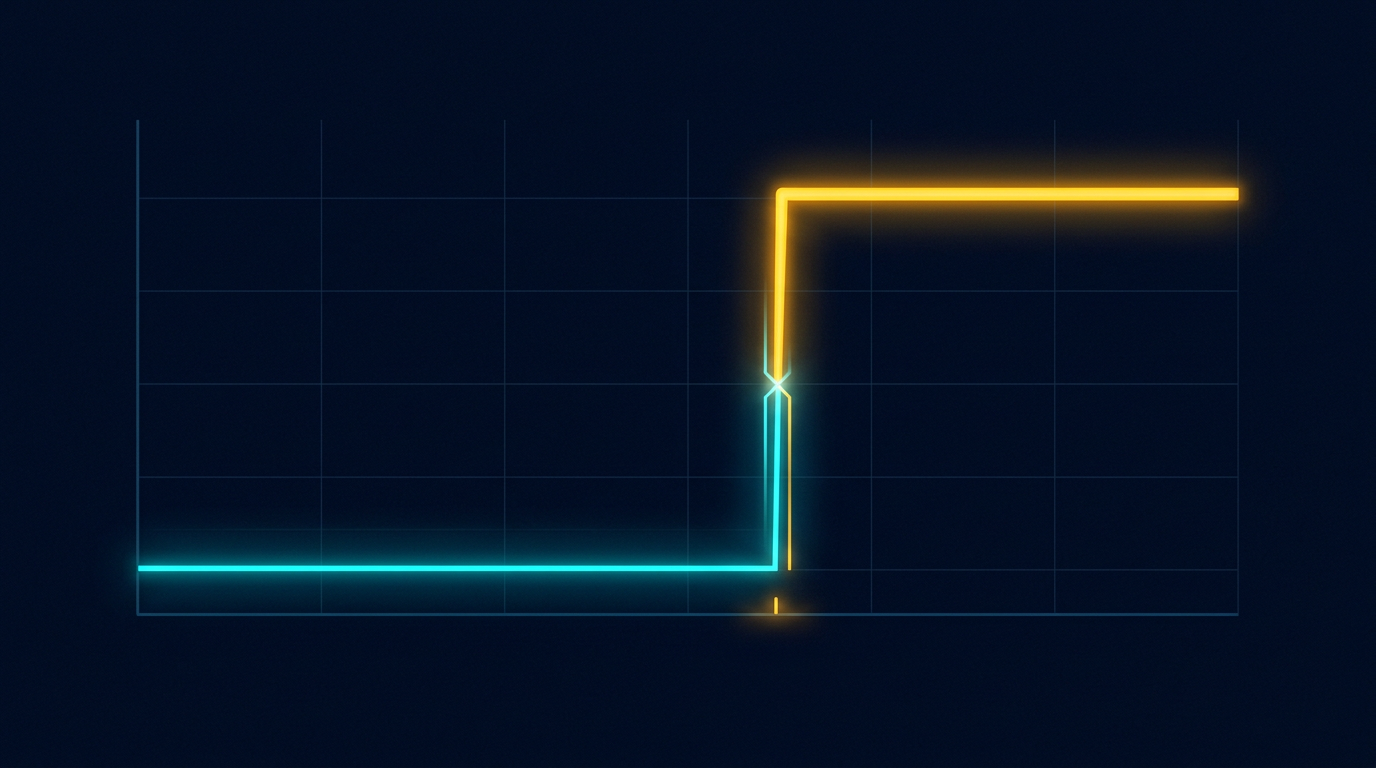
The free tier is a loss leader. The vendor gives away a small number of requests per minute, or per day, or per month, in exchange for the chance to be in your codebase. The math is simple. If the free tier gets you to write the integration, the vendor has a 60% chance of being in your stack for the next three years.
That serves as the actual cost of the free tier. It is not the server time. It counts as the integration time, the documentation time, the on call time when the API changes. By the time you are paying, you are paying for the cost of switching, not the cost of the calls.
What “free” actually costs
Three things happen when you build on a free tier.
1. The integration is in the codebase, not the spec.
When you choose an API, you are not really choosing the API. You are choosing its error model, its streaming behavior, its token format, its rate limit headers, its SDK conventions, its deprecation policy, and its breaking change cadence. By the time the free tier ends, all of that is baked into the system.
Switching to a different provider means re implementing the integration. That is days or weeks of work, depending on how deep the integration goes. The free tier bought you those days. You just paid for them by not spending them on a vendor decision.
2. The data model is implicit.
Every AI API has opinions about how to structure prompts, how to handle function calls, how to manage conversation state. Some of these are exposed. Most are not. By the time you have built real features on top of a free tier, you have learned the implicit model. That knowledge is not transferable.
Switching providers means re learning a new implicit model, with all the bugs that implies. The free tier does not just buy you the integration. It buys you a model of how the integration works, in your head, that you cannot easily port.
3. The user experience is shaped by the limits.
Free tiers have rate limits. The product you build on a free tier will have those rate limits baked in. A feature that retries on a 429, a UX that says “please wait 30 seconds,” a flow that batches requests to fit in the per minute limit. These are not features of the product. They are features of the free tier that got shipped to users.
When the limits change, the product changes. When you switch providers, the limits are different, and the product has to change again.
What the pricing looks like after the free tier
The pricing curves of AI APIs are not as simple as they look. A few things to watch for.
- Per Token vs per request. Some APIs charge per token, some per request, some per “generation.” The unit cost is hard to compare without modeling your actual workload.
- Context window pricing. Most APIs charge more for larger context windows, even if you do not use the full window. A 200K context window is rarely 2x the cost of a 100K one. Sometimes it is 5x.
- Caching discounts. Many providers offer prompt caching, where repeated tokens in the prompt are billed at a fraction of the rate. The savings are real but only if you design for them.
- Burst pricing. A few providers offer burst capacity at a premium. The premium is large. Use it for known spikes, not as a default.
- Enterprise minimums. Some vendors have a minimum monthly commitment for “priority” or “enterprise” tier. The price goes down per token. The total goes up. Watch the floor.
How to build on a free tier without getting trapped
- Write the integration behind an interface. Treat the AI API as one implementation of a “generate text” interface. The interface is yours. The provider is replaceable. Most teams skip this and regret it.
- Track what you would actually pay at production volumes. Run your test suite with the API calls logged and the costs estimated. If the production traffic cost would be 10x your budget, you should know now, not six months in.
- Have a second provider evaluated before you ship. Not to use as a backup, just to know what the alternative costs and how hard it would be. The exercise of evaluating the second option amounts to the cheapest insurance you can buy.
- Avoid the proprietary features. The killer feature of one provider amounts to the lock in of one provider. If a feature is unique to one vendor, that is a feature you cannot afford to depend on.
- Read the deprecation policy. Some vendors commit to long term stability. Some change the API every quarter. The free tier does not tell you which one you are signing up for.
What to do if you are already locked in
The lock in is real but it is not permanent. The cost of switching stands as the cost of building the abstraction layer you should have built in the first place, plus the cost of re learning the new provider’s implicit model. Neither of those is cheap. Both are bounded.
- Estimate the switching cost honestly. Add up the integration hours, the testing hours, the on call learning curve, and the chance of regression bugs. Multiply by your engineering rate. Now you know what “expensive” means in this context.
- Negotiate before you switch. Your existing provider would rather discount you than lose you. A 30% reduction on a locked in account sits as the easiest discount in tech.
- Migrate one feature at a time. Do not rewrite the whole product. Move one feature to the new provider. Run both. Compare output. Then move the next one.
- Keep the abstraction layer in the months ahead. The mistake that got you locked in once will get you locked in again. Two interfaces, even if one is unused, is a fraction of the cost of being locked in again.
The bottom line
The free tier is not free. It is a price discounted integration, paid for by the cost of switching later. The vendors know this. The math works because most teams never actually switch.
If you are building on a free tier today, the cheapest move is to spend a day putting it behind an interface you control. That stands as the difference between a vendor decision you can revisit and a vendor decision you cannot.
Sources & Further Reading
All claims in this article are sourced from primary documentation, vendor advisories, and reputable security researchers.
Spotted an error? Email the editor. Corrections are issued with a visible correction note.
Editorial standards. Every article on humanrequired.org is reviewed by a human editor before publication. AI may assist with drafting or research; final editorial control is human. Read the full standards.


