
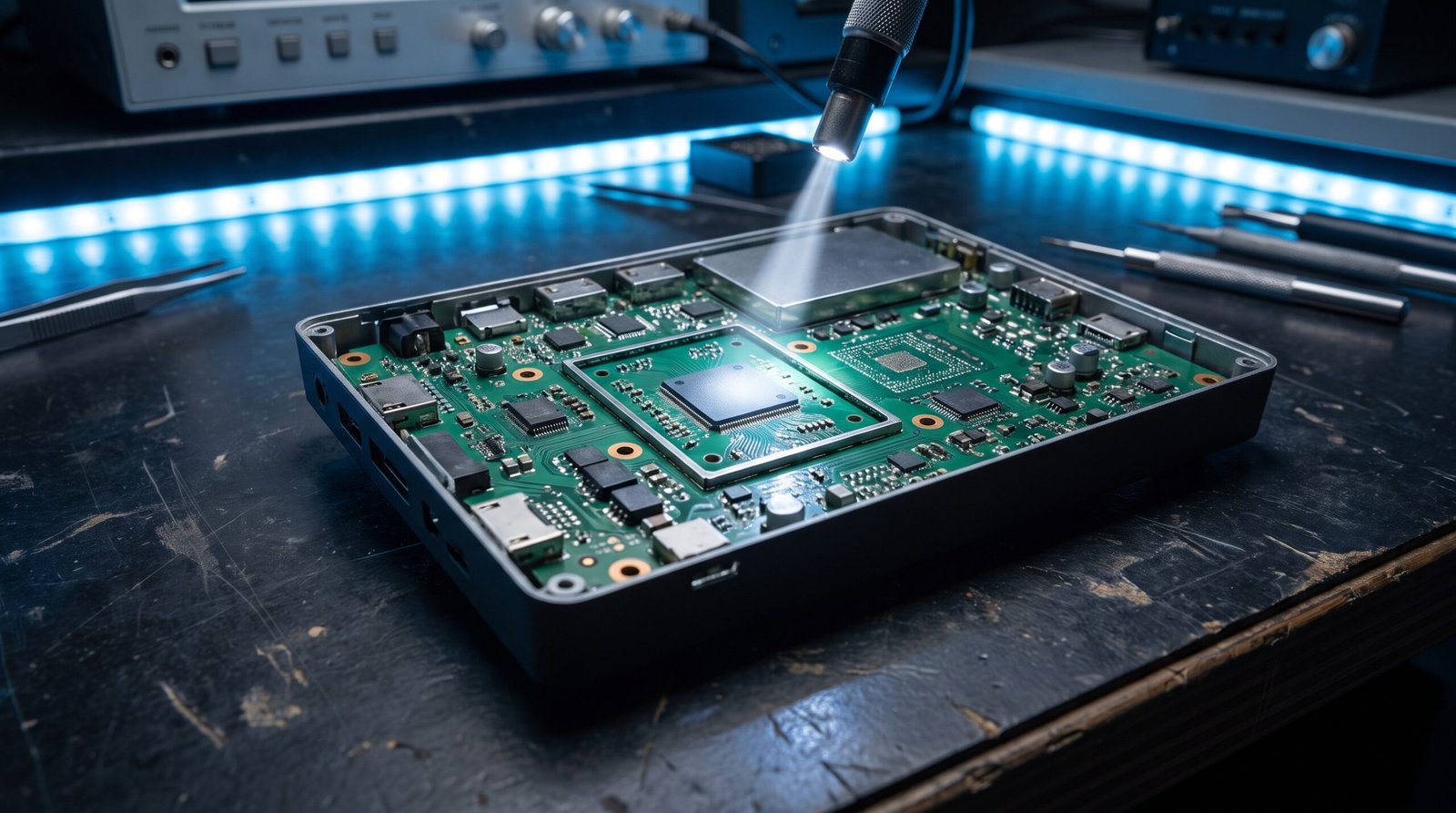
In 2024, the average American household owned 21 connected devices, according to Parks Associates. The same household replaced a primary device, usually a phone, every 2.7 years. The average lifespan of the replaced device before disposal was 4.1 years, meaning devices were being replaced before they failed. The same study estimated that 150 million phones were discarded in the US in 2023. Of those, an estimated 17 percent were refurbished or recycled. The rest went to drawers, landfills, or shipped overseas.
This is what the right-to-repair fight is actually about. It is not about saving individual devices. It is about whether the hardware economy is fundamentally a service economy, where you rent a function from a manufacturer, or a product economy, where you own a thing and can fix it.
The state of repair
iFixit, the dominant source for repair data and policy, scores devices on a 1-to-10 repairability scale based on teardown difficulty, parts availability, and tooling required. The trend is not good.
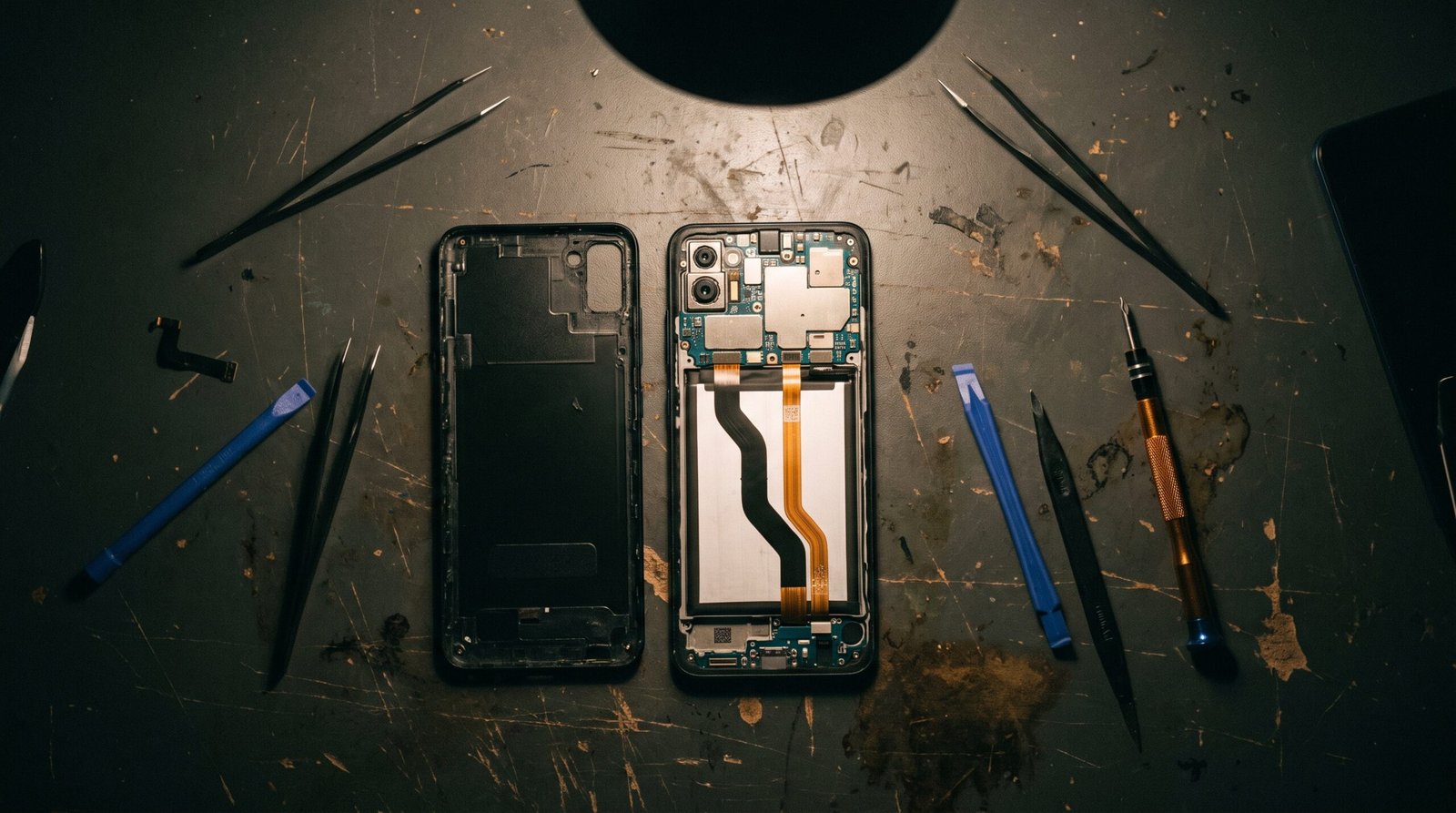
Flagship smartphones, which iFixit has been scoring since 2015, have gone from an average of 6.5 in 2015 to 4.2 in 2024. The recent iPhones, Galaxies, and Pixels are harder to open than the 2014 equivalents, use more proprietary fasteners, and depend more on paired components that cannot be replaced without manufacturer software authorization.
Apple’s parts pairing, introduced fully in 2024, ties a replacement screen, battery, or camera to the device’s logic board via a serialized handshake. Without Apple’s Activation Lock-style software authorization, the replacement part shows as “unknown” in iOS and disables certain features. Apple argues this is for security. Independent repair shops argue, with some evidence, that it is for control.
The fights that are happening
Four active fronts.
State-level right to repair laws. New York, Minnesota, California, Oregon, and Colorado have all passed versions. The state laws vary, but the core requirement is that manufacturers make parts, tools, and documentation available to consumers and independent shops for a defined period after a product’s release. The federal version, the Fair Repair Act, has been introduced in multiple Congresses and has not passed. The state laws have survived industry lawsuits so far.
Apple’s about-face. In 2022, Apple announced a Self Service Repair program, providing parts and manuals for iPhone, Mac, and (eventually) iPad. The program is real but limited. Parts are sold at near-original-equipment pricing, which often makes self-repair more expensive than a third-party shop. Manuals are technical. The activation lock for parts pairing remains.
Tractor and equipment lockouts. John Deere’s software restrictions on tractor repair remain the canonical example. The 2023 memorandum of understanding between John Deere and the American Farm Bureau Federation was a partial concession, allowing farmers to download firmware for repairs. The actual implementation, according to independent repair advocates, has been uneven. Other heavy equipment makers (Caterpillar, CNH) are under similar pressure.
Right to repair in the EU. The EU has moved faster than the US. The 2024 EcoDesign regulation requires manufacturers of phones, tablets, and laptops to make batteries and certain key parts replaceable with common tools, and to make parts available for 7 years after a product’s last sale. The US has nothing equivalent at the federal level.
What is actually getting worse
Three trends that the right-to-repair movement has not reversed.
Device consolidation. The number of devices per household is going up, but the number of device types is going down. The phone, the laptop, the headphones, the watch, the speaker, and the e-reader are increasingly made by the same manufacturer, running the same software, and locked to the same account. The result is more devices, fewer independent choices, and a single point of failure for an entire personal computing environment.
Subscription hardware. Phones, laptops, and cars are increasingly sold as monthly subscriptions rather than purchases. The right-to-repair conversation assumes ownership. If you do not own the device, the question of whether you can fix it is replaced by the question of whether the manufacturer will fix it for you, on their terms, on their schedule.
Software as the wall. Even on devices that are physically repairable, software is becoming the lock. Activation locks, parts pairing, signed firmware, and account-bound features mean that a “repaired” device may be a bricked device if the right accounts cannot be transferred. This is the part of the conversation that is most often missed. The hardware can be fixable. The software increasingly is not.
What to do about it now
The personal recommendations, ranked by impact.
- Buy devices that score 7 or higher on iFixit. This is a small list. The list grows every year. Buying from it is the single largest market signal an individual can send.
- Use independent repair shops before manufacturer service. They are usually faster, often cheaper, and the only thing that grows the independent ecosystem is volume.
- Refuse parts pairing when you have the choice. This is a category where the only meaningful action is collective. State right-to-repair laws are how individuals affect this. Vote accordingly.
- Buy refurbished. Back Market, Swappa, and the manufacturer-certified refurbished programs are real, and the margins support independent refurbishers who can repair the devices they sell.
- Keep old devices working. A working 2018 laptop is better than a working 2024 laptop if the 2024 version will be e-waste in 2028. Longevity is a feature.
What it would actually take to fix it
Three structural changes, none of which are happening at the federal US level, all of which would matter if they did.
A federal right-to-repair law. State laws are useful and necessary. They are also fragmented, and the manufacturers have a federal lobbying operation. A federal law with parts-pairing disclosure requirements, software unlock requirements, and a meaningful private right of action would set a floor.
An e-waste law that prices in the cost. Extended producer responsibility, where the manufacturer is responsible for the end-of-life cost of the device, is in place in 25 US states and most of the EU. It works. It is not a fix for repairability, but it changes the calculus for design decisions that today treat disposal as free.
An antitrust environment that allows right-to-repair enforcement to bite. The current state-level enforcement is uneven in part because the manufacturers have the resources to litigate every case. Antitrust enforcement, real antitrust enforcement, would change the dynamic.
The honest ending
The hardware economy is getting worse for the people who use the hardware. It is getting better, on a per-device basis, for the people who make it. Those two facts are related.
Repair is a political question, not a technical one. The technology to make most consumer electronics repairable exists. The supply chain to support it exists. The skilled labor to do the repairs exists. What does not exist, in most of the US, is the legal and economic framework to make it the default.
That is what the fight is about. Not screws. Not batteries. Whether you own the things you paid for, or whether you are renting them from a manufacturer who can revoke the lease.