

4 MIN READ
Live performance is the part of the music industry AI has not meaningfully touched. Recorded music is being remixed, generated, and synthesised by AI at a pace that would have seemed impossible two years ago. The live stage, the actual physical or virtual concert, the moment the artist is in front of the audience, has not been disrupted in the same way. The reasons are interesting, and the reasons will not last. Here is what is happening in 2026.
Why the live stage has been resistant
Three forces are keeping AI out of the headline slot, and they are not the ones the AI sceptics usually point to. The legal system, the audience, and the logistics all push in the same direction, and the push is strong enough that even the better funded attempts to put an AI artist at the top of the bill have run into it.
Start with the legal reality. The recorded music copyright system has, in 2026, clear (if contested) rules about what AI generated music can and cannot do. The live performance system runs on much older, much simpler rules. The venue holds a license with the performing rights organisations (ASCAP, BMI, PRS). The artist gets paid through mechanical and performance royalties. The promoter and the venue get paid through ticket sales. An AI artist performing an AI generated set in a venue with a performing rights license remains a category the legal system has not addressed yet. Most venues will not risk the legal exposure. Most promoters will not risk the artist fee disputes. The grey zone has been a feature for the human artist, not a bug.
Then the audience. The crowd pays to see a human performer. The pattern that has held through 2025 and into 2026 is the same: a known AI generated persona can charge a meaningful share of a comparable human artist’s ticket price, but only a small share of audiences will pay the full ticket for the AI persona. The human performer has pricing power. The AI performer has curiosity pricing, which fades the second time the audience sees the same persona.
Then the operational reality. A live tour runs on logistics. Sound, lights, stage, transport, hotel, security, insurance. The AI generated artist cannot do a soundcheck. It cannot handle the stage banter. It cannot respond to a request from the crowd. The operations side of live performance is built around a human, and that has not changed.
What is changing
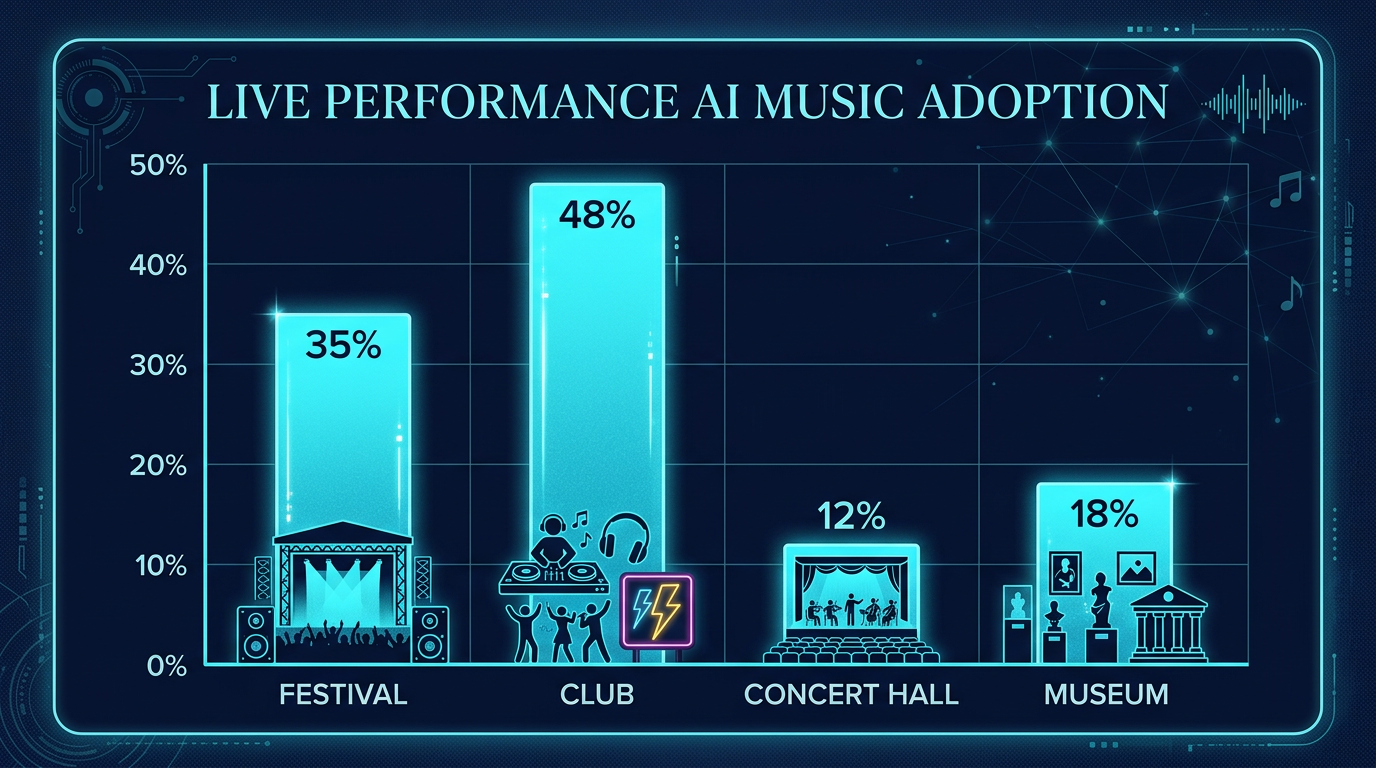
AI has already moved from curiosity to structural feature on the live side, and the trend lines are different from each other. The first big move is the holographic and virtual live performance. ABBA Voyage in London, the KISS avatar tour, the Travis Scott Fortnite event. These are not AI generated performances, but they are computer generated performances, and the production chain moves in the AI direction. The next generation of these shows will use AI to generate the visuals in real time, reacting to the music and the audience.
The AI DJ has settled into a real slot in the club economy. The role does not replace the human DJ. It handles the warm up set, the after party, the moment when the venue needs music and the headliner takes a break. The economics work. The audience does not pay a premium for a human warm up, and the AI DJ does not need a green room.
The avatar artist is the trend with the most velocity and the most risk. The first generation (FN Meka, Aitana Lopez, the Noonouri persona) was heavily produced and somewhat controversial. The second generation, in 2026, looks much more sophisticated. The persona runs generated. The music runs generated. The live performance runs the avatar on stage with a backing track. The audience knows. The audience buys tickets anyway, for the spectacle and the music, not for any human behind the avatar.
What the live performance world will look like in 2027
Human performers at the top of the bill. AI generated support and warm up. Holographic and virtual performances as a parallel track to the physical tour. AI generated avatar artists as a small but growing segment, mostly in the electronic and hip hop genres. The pricing power stays with the human performer. The economics shift toward AI for the supporting slots. The legal grey zone starts to resolve as the performing rights organisations work out the royalty flow for AI generated performances. The market does not collapse. The market fragments. The human performer takes a slightly larger share of a slightly smaller pie. The AI generated performer takes the supporting slots, the after parties, the experimental venues. The audience adapts, as the audience always does.
The bottom line
Live performance has been AI resistant because of the legal grey zone, the audience preference for human performers, and the operational reality of a tour. The legal layer and the audience preference will erode by 2027. The operational reality will not. The market does not get replaced, it gets split: the human performer keeps the headline slot and the pricing power, the AI generated performer takes the warm up and the supporting bill. The interesting question for 2027 is not whether AI is in live performance. It is what the headline acts do about it.
Sources & Further Reading
All claims in this article are sourced from primary documentation, vendor advisories, and reputable security researchers.
Spotted an error? Email the editor. Corrections are issued with a visible correction note.
Editorial standards. Every article on humanrequired.org is reviewed by a human editor before publication. AI may assist with drafting or research; final editorial control is human. Read the full standards.


