

5 MIN READ
Picture the breach beat in January 2026. A handful of high profile incidents, a few front page headlines, the usual cycle of post mortems and press statements. Each one fitted a category that had been on the warning list for at least a year. The post mortems that followed told the same story they always tell, and the deck sent to the board kept selling the same version of cybersecurity the deck always sells. Here is what the headlines shared, what the post mortems shared, and what the board version of the story has been quietly leaving out.
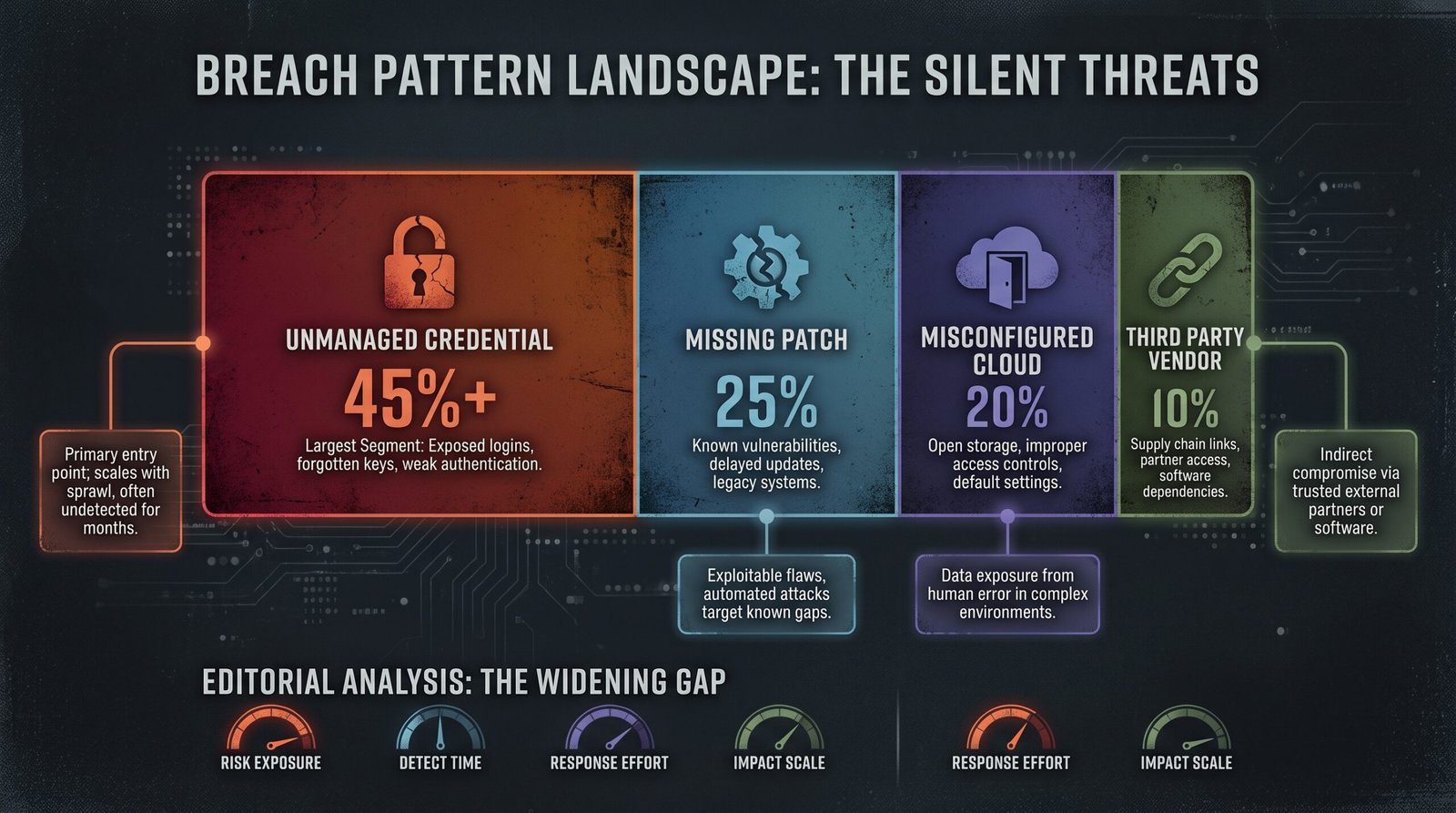
What the breaches actually were
Four categories, all of them familiar. Third party vendor compromise led the month, with attackers breaking into a software or service provider and using that access to walk into every downstream customer at once. Credential abuse ran a close second, with criminals replaying usernames and passwords harvested from earlier breaches that nobody had bothered to rotate. Unpatched edge device exploitation came third, with attackers using CVEs that had been published days or weeks earlier. Phishing, still the oldest trick in the book, rounded out the top tier, with social engineering that bypassed the controls the user had been trained to recognise.
None of those four are new, and that is the point worth sitting with. The post mortems from January 2026 read almost identically to the post mortems from January 2025, and January 2024, and January 2023. The pattern that keeps showing up is not that defenders missed a clever new technique. It is that the controls the compliance framework had certified did not catch the breach. The user noticed something felt off. The response ran slower than the runbook specified. The recovery cost more than the budget had estimated. These are not novel findings, and they are the same four findings, year after year, dressed in the latest vendor’s branding.
What the marketing has been quietly ignoring
The compliance industry has spent the last decade selling executives on a clean equation. Pass the audit, buy the right tooling, ship the right framework, and the breach is someone else’s problem. The breaches of January 2026 are a quiet refutation. Compliance certification is not the same as protection. Investment in a control is not the same as the control working as intended. Operational runbooks in a binder are not the same as operational runbooks under pressure. The version sold in board decks and vendor pitches has been quietly leaving this part out, and the morning headlines keep proving why.
The consequence is structural. Executives keep getting surprised by incidents that threat intelligence had been predicting, because the story they were sold was the version that sells compliance. Defenders get asked to fix a breach that was not supposed to happen in a fully certified environment, and the budget conversation that follows is the same one that has been happening for the last five years. The post mortems name the gap. The pitch deck refuses to.
What to do about it
Honesty, in writing, with the executive sponsors. Not a rebrand of the same compliance dashboard. A direct, plain language summary of what the controls actually cover, what they do not, and what a criminal who read the latest post mortem would do next. The incidents of January 2026 should land in the next executive briefing as a cost figure, a recovery time figure, and a list of the specific controls that did not catch them. Compliance status belongs in a different slide. So does the pitch.
Tabletop exercises that rehearse the breach the deck says cannot happen, not the breach the runbook is built to handle. Threat hunting against the specific TTPs the latest post mortems described, not against a generic detection backlog. And procurement that asks the vendor how the control fails, not just whether the control exists. The people doing the work have known what to do for a while. The harder part is being willing to say it in the room where the budget gets signed.
The bottom line
January 2026 was a month of predicted incidents, predictable post mortems, and a predictably surprised board. The defenders who change the conversation are the ones willing to put the gap between compliance and protection on the slide, in plain language, before the next headline does it for them.
Sources & Further Reading
All claims in this article are sourced from primary documentation, vendor advisories, and reputable security researchers.
Spotted an error? Email the editor. Corrections are issued with a visible correction note.
Editorial standards. Every article on humanrequired.org is reviewed by a human editor before publication. AI may assist with drafting or research; final editorial control is human. Read the full standards.


