6 MIN READ
Four real options exist in 2026 for licensing AI generated music, and the choice between them is not a technical one. It is a business one, driven by use case, budget, and how much risk the creator or the buyer is willing to absorb. Two years of lawsuits have not settled the picture, but they have clarified what each option actually covers and what it does not. This is the field guide.
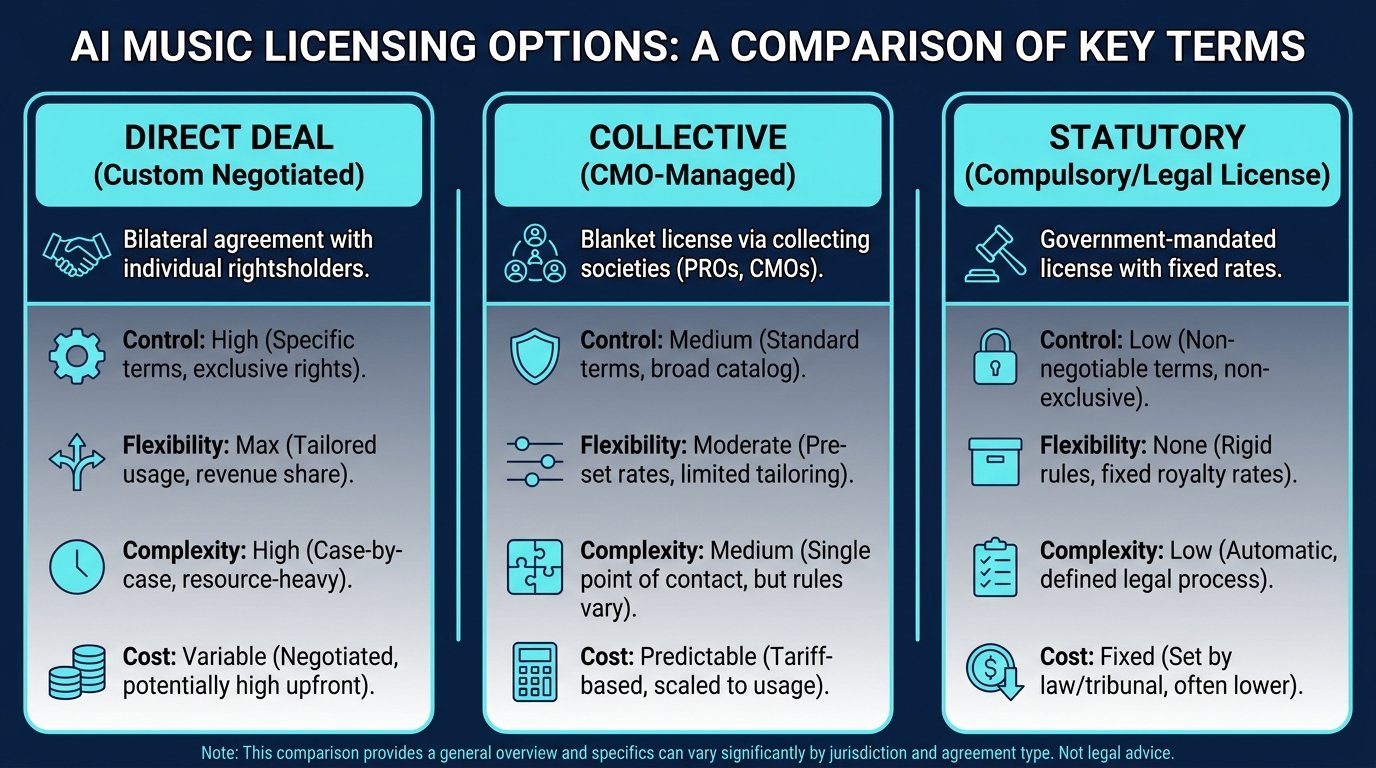
The four models
Start with the platform license. Suno, Udio, and the rest of the AI music generation platforms grant a usage right to whoever logs in and pays the subscription. The right covers use of the generated output inside the boundaries the platform sets, usually personal projects, social posts, and small scale commercial work. Anything bigger needs a separate license on top.
The sync license covers use of a piece of music in an audiovisual work, films, TV, ads, games, anything with a picture moving underneath it. Sync is paid per use, per song, per project, and the price varies by a lot. A well known song can clear in the high five figures. An unknown song can land in the low four figures. AI generated tracks sit below recorded equivalents because the rights chain on the underlying training data is still being settled in court, and partly because there is no publisher on the back end demanding a cut.
The master license covers the specific recording, and is paid to the record label that owns it. Master is usually a percentage of the sync fee, in the 50 to 100 percent range, and is negotiated alongside the sync. Most projects that need a sync also need a master, and the two together are what the rights clearance looks like in practice.
The training data license is the one nobody wanted to talk about in 2023. Major labels are now demanding payment for the music their catalogs contributed to model training, with deals running per model or per use. A full major label catalog can clear in the eight figures. An independent label is closer to six. An individual artist is in the four figures. This is also the license the industry is most worried about, because the legal ground underneath it is still being tested in court.
What each model costs
Most platforms bundle the license into the subscription. Monthly fee runs from 10 dollars to 200 dollars a month depending on tier. Cheapest option, most predictable option, and the one most creators start with because the alternative is doing the rights clearance work themselves.
Sync pricing varies by a lot. A well known song can run 50,000 to 200,000 dollars for a single use. An unknown song is more like 1,500 to 5,000. AI generated tracks fall somewhere below the recorded equivalent, partly because the rights chain on the underlying training data is still being settled in court, and partly because there is no publisher on the back end demanding a cut.
Master pricing tracks sync, usually at 50 to 100 percent of the sync fee, paid to the record label that owns the recording. Most sync deals need both a sync and a master, and the two are negotiated together. If the music is fully AI generated with no human recording, master often collapses into the platform license, which is one of the reasons the cheaper path is so much cheaper.
Training data is where the real money moves. Major label catalogs are clearing in the eight figures for a single model, independent labels in the six figures, individual artists in the four figures. The deals are per model, per use, or per output, and the price has gone up every year since 2023 as the labels have realised what their catalogs are worth to the labs.
How to pick the right one
The honest answer depends on who is asking. A hobbyist or a small creator is usually fine on the platform license alone, and probably should not pay for anything more until the project gets a budget behind it. An independent creator or a small business that needs music for a client deliverable is usually looking at the platform license plus a per project sync. A large team or a brand working on a real campaign is going to end up negotiating a custom deal, because the platform terms do not cover the use case at the volume they need.
Rule of thumb. Use the platform license if there is no per use budget. Use the platform license plus sync if there is a project budget. Use a custom deal if the use case is high volume, high visibility, or legally exposed. Anything more elaborate than that is usually somebody trying to sell you something.
What the licensing landscape is going to look like
Expect the next two years to settle the picture, mostly. The major labels are going to keep winning the headline lawsuits and signing the headline training data deals, and the platforms are going to keep building their paid tiers to account for the costs. The market is going to split into the platforms that paid up and the platforms that did not, and the user is going to feel that split in the price.
The people doing this well right now are not the people with the best tech. They are the people watching the lawsuits, negotiating the licenses early, and building the business model around what the courts say rather than what the platforms say is allowed. That part is not glamorous. It is also the part that decides whether the business survives the next twelve months.
The bottom line
Platform for the hobbyist, platform plus sync for the working creator, custom deal for anyone whose use case is high volume or high visibility. The training data license is where the real money moves and where the legal ground is still being tested, so the next two years are going to look different from the last two. Build the business model around what the courts are saying, not around what the platforms would like to be allowed.
Sources & Further Reading
All claims in this article are sourced from primary documentation, vendor advisories, and reputable security researchers.
Spotted an error? Email the editor. Corrections are issued with a visible correction note.
Editorial standards. Every article on humanrequired.org is reviewed by a human editor before publication. AI may assist with drafting or research; final editorial control is human. Read the full standards.